1 / 22
↑ ↓ or scroll to navigate · F for fullscreen
Home Week 3 · Everything Is a World

Everything Is a World

Week 3
One Song · NYT · Shah/Prince Challenge 3
Home 10-Week Overview

Week
3

Home Week 3 · Critique Protocol

Critique Protocol

I Like

Name what’s working and why. “I like how _____ because _____.”

I Wish

Name what could go further. “I wish _____ because _____.”

I Wonder

Open a door. “I wonder what would happen if _____.”

Not This

  • “I don’t like it” or “It’s good” — vague reactions don’t help anyone improve.
  • Feedback is about the work, not the person.
Home Week 3 · What You’re Building
01
Dear Data

See data in everything

02
Iconic Beginnings

Design the invisible

03
Everything Is a World

See a world as data — document, analyze, find insights

04
The 30-Year Object

Design things worth keeping

05
Invisible Senses

Translate a place into something someone else can feel

06
Curating & Taste

Articulate your design principles

07
Get Out of Your Head

Design the collaboration, not just the product

08
Ugly Darlings

Honest iteration — early work is material, not precious

09
Less But Better

Edit ruthlessly — what you remove matters as much as what you keep

10
Who Are You Now?

Know who you are as a designer — and show it

Home Week 3 · Overview

Week 3

Theory

Song Exploder — one song deconstructed, told entirely by the artist. The host says almost nothing. Listen to any episode.

This American Life — "Here’s a person. Here’s what happened. Here’s why it matters." Listen to any episode.

Portigal, Ch. 1–3 — interviewing users: open-ended questions, silence as a tool, follow-up over prepared lists.

Case Studies

One Song / Prince — one song is a world. Three lenses on “Let’s Go Crazy”: performer, producer, fan. Going deep into one thing reveals an entire world.

The New York Times — a newspaper of fixed units becomes a flexible digital platform without losing its original tone and identity.

Shah / Prince & the Internet — small stories reveal big worlds. Writing substantively about a subject who won’t be interviewed. Class guest: Hasit Shah (NYT).

Design Challenge

"Everything Is a World"

Pick a specific, mundane rabbit hole. Go deep: expert podcast(s), community forums, direct contact. Learn to see a world as data. Build a design brief clear enough for someone else to design from.

Deliverables: full rabbit hole documentation (transcripts, threads, links), design brief (what people love, pain points, insights), principle transfer statement, portfolio PDF. Interview with a real person due before Week 7.

Due: Monday before class.

Home Week 3 · Theory

Theory

Song Exploder

Pick any episode

Portigal, Ch. 1–3

Interviewing Users

Ira Glass on Storytelling
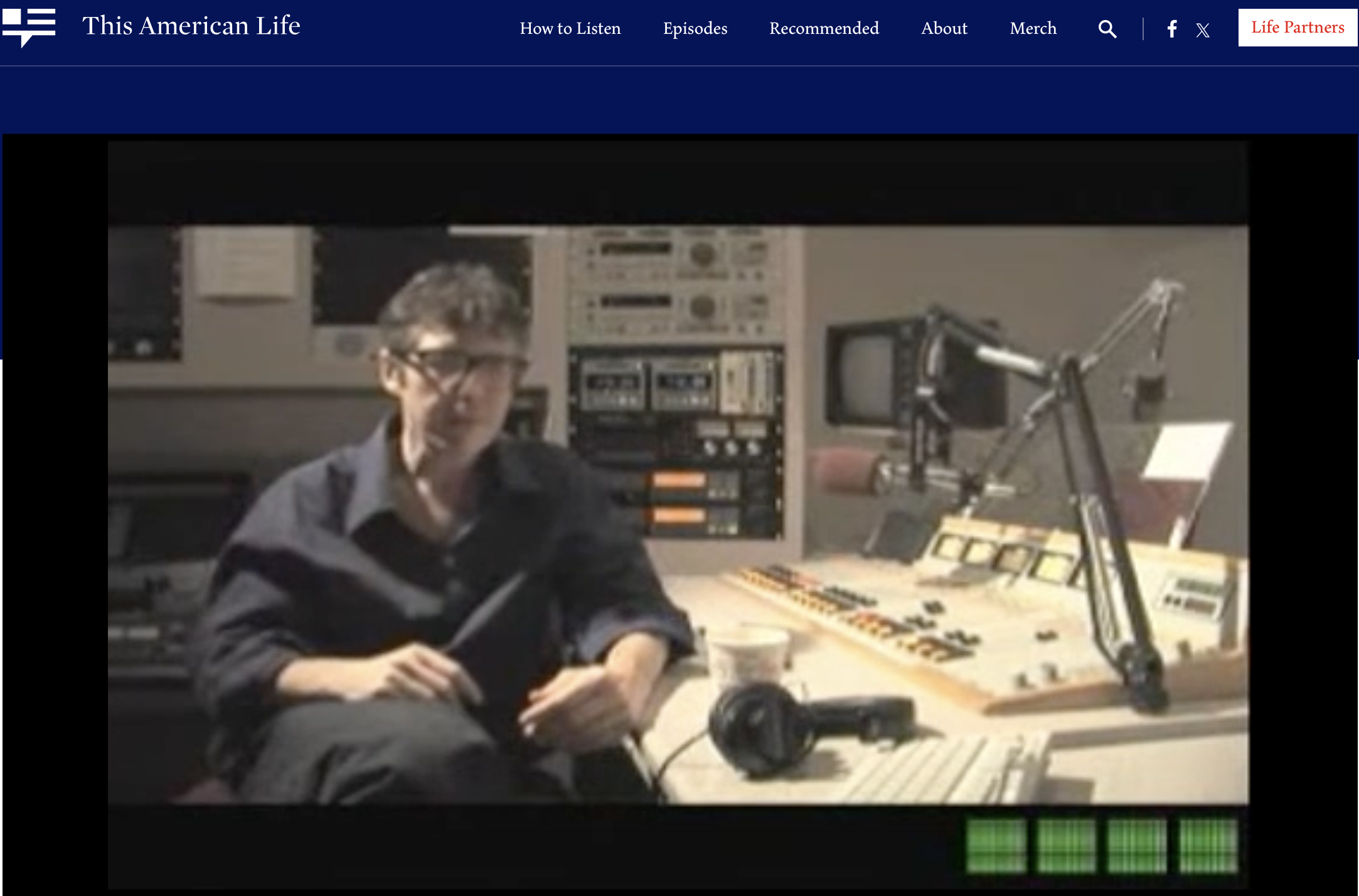
4-part video series

Groups assigned in class. Each student reads one.

Song Exploder — The Disappearing Interviewer

In Song Exploder, Hrishikesh Hirway deconstructs one song per episode, told entirely by the artist who made it. The host says almost nothing — his voice is edited out of the final product. What remains is the musician walking you through every decision: why this key, why this lyric, why this sound at this moment. The technique is radical restraint: the interviewer’s job is to disappear so the subject’s creative process becomes visible. When you’re ready to do your interview, notice what happens when you stop steering and let the person take you into their world on their own terms.

Portigal — Interviewing Users

Steve Portigal’s core argument is that the best interview data comes from open-ended questions, deliberate silence, and follow-up rather than prepared lists. Most interviewers talk too much, ask leading questions, and fill silences that the subject was about to fill with something more honest. Silence is a tool — when you stop talking, people elaborate, correct themselves, or reveal what they actually think. The first three chapters lay out practical techniques: how to ask questions that open rather than close, how to listen for what is not being said, and how to follow the thread when the subject goes somewhere unexpected.

Reflection assignment: Find a podcast episode for each of the worlds you’re considering exploring and note whether/how it represents any of these concepts. Write about it in your WIP and we’ll discuss them in class.

Home Week 3 · Theory · Ira Glass

Ira Glass on Storytelling

Ira Glass in the studio

4-part video — thisamericanlife.org/extras/ira-glass-on-storytelling

1

Two building blocks of story

The anecdote (a sequence of actions — “this happened then this happened”) and the moment of reflection (“here’s why it matters”). You constantly alternate between the two.

2

Raise questions, then answer them

A good story is always raising a question and then answering it. That momentum pulls the listener forward.

3

Kill boring stuff ruthlessly

If a story isn’t working, abandon it — even if you’ve put in a lot of work. More stories are killed than are aired.

4

The taste vs. ability gap

Beginners have good taste (they know what great work looks like) but their own work doesn’t match. The gap is painful but normal. The only way to close it is to produce a huge volume of work.

5

Do a huge volume of work

Set deadlines. Finish things. It’s only by going through a volume of work that you close the gap between your taste and your ability.

6

Be yourself

The best broadcast work sounds like a real person talking, not a “broadcaster voice.” Find your own voice, not a performance.

Home Week 3 · Cases

Cases

One Song — Prince

One song is a world

The New York Times

Fixed units → flexible platform

Shah — Prince & the Internet

Small stories reveal big worlds

One Song — One Song Is a World

Diallo Riddle and LUXXURY spend an entire episode inside Prince’s “Let’s Go Crazy.” With guest Bashir Salahuddin, three different lenses — performer, producer, fan — each hear something the others miss. One track becomes a portal into Minneapolis, the Revolution, Purple Rain, funk-meets-rock. Takeaway: Going deep into one thing reveals an entire world. Your rabbit hole should have this kind of depth. Class guest Hasit Shah (NYT, Prince expert) joins us for this challenge.

The New York Times — Fixed Units, Flexible Platform

A newspaper is a system of fixed units — headlines, columns, sections, bylines. The NYT has successfully become a flexible digital platform without losing its original tone and identity. The grid adapts, the hierarchy shifts, multimedia enters, but the voice and authority remain. Takeaway: A world can evolve its form dramatically while preserving what makes it recognizable. Guest Hasit Shah (NYT) walks us through how.

Shah — Prince & the Internet: Small Stories, Big Worlds

Hasit Shah’s NPR piece on Prince’s relationship with the internet demonstrates how to write substantively about a subject who does not want to be interviewed. Small, interesting stories — fans in line not sure what to do with their phones, Prince’s contradictory moves online — unfold and reveal a much bigger world. Takeaway: Cultivate the habits of curiosity to notice and storytelling to reveal. You don’t always get the interview — but the world is still there if you know how to look.

Home Week 3 · Interviewing as Design
Rabbit Holes

Every subject contains a rabbit hole.

Ballpoint
Pens
Lavender
Parking Lot
Design
The Color
Blue
Sourdough
Starters
Fire
Escapes
Manhole
Covers
Shoelaces

Someone is obsessed with every one of these.
Your job: find that person and pull us into their world.

Cultivating curiosity. Being a rabbit-holer. Truly everything is fascinating — learn to be that way and you will naturally become a better designer because you'll be looking at the world like that. Sidewalks are worlds. Pens are worlds. Energy bills are worlds.
Home Week 3 · Case · One Song
One Song — Prince “Let’s Go Crazy”
One Song Is a World

Diallo Riddle (actor/writer) and LUXXURY (producer/DJ/songwriter) spend an entire episode inside a single song: Prince’s “Let’s Go Crazy” from Purple Rain (1984). With guest Bashir Salahuddin, they trace the song through Prince’s wild guitar solos, iconic vocals, Minneapolis, the Revolution, funk-meets-rock genre boundaries — all from one track.

Three different lenses on the same artifact: a performer’s ear, a producer’s ear, a fan’s obsession. Each hears something the others miss. This is what going deep looks like — one song becomes a portal into music history, production technique, and cultural moment.

Class guest: Hasit Shah, NYT, and leading expert on Prince, will join us for this challenge. The rabbit hole you choose should have this kind of depth — a world where one obsessed person can talk for an hour and still have more to say.
Home Week 3 · Case · The New York Times
nytimes.com — April 2026
Fixed Units → Flexible Platform

A newspaper is a world. And not even much of a paper one. It’s now a system of many units: headlines, columns, sections, bylines, the fold, web, mobile, games. For over a century the NYT refined this system in print. The digital transition could have destroyed it — instead, the Times evolved the form while preserving what makes it recognizable.

The grid adapts. The hierarchy shifts. Multimedia, interactive graphics, and audio enter. But the voice, the authority, and the editorial identity remain. The homepage you see today is not the front page of 1996 — but it is unmistakably the Times.

Hasit Shah (NYT) walks us through how a newspaper of fixed units became a flexible digital platform without losing its original tone and identity — and what that teaches about designing systems that evolve.
Home Week 3 · Case · Shah / Prince
NPR — “Poor Lonely Computer: Prince’s Misunderstood Relationship With The Internet”
Small Stories Reveal Big Worlds

Hasit Shah’s NPR piece on Prince and the internet shows how to write substantively about a subject who does not want to be interviewed. Prince famously refused access — so Shah built the story from the edges: fans in line not sure what to do with their phones, contradictory moves online, the gap between Prince’s public silence and his digital footprint.

Small, interesting stories unfold and reveal a much bigger one. This is the craft of Everything Is a World: cultivate the habits of curiosity to notice, and storytelling to reveal. You don’t always get the interview — but the world is still there if you know how to look.

Hasit Shah is our class guest for this challenge. He’ll talk about how he uses small stories to tell big important ones — and how to see a world even when the door is closed.
Home Week 3 · Exercise

Deepest Rabbit Hole

Exercise 10 Minutes Pairs

Step 1: Pairs. Take turns sharing your deepest, nerdiest rabbit hole. Follow-up questions only — don’t change the subject. (5 min)

Step 2: Draw a data visualization of your conversation. What patterns emerged? What surprised you? (5 min)

Rule: If you wouldn’t share it with your parents, pick a different one.

Week 1 you drew data about yourself. Now you’re drawing data about someone else’s obsession — from a live conversation. This is interview + data drawing in one exercise.
Home Week 3 · Design Challenge

Everything Is a World

Design Challenge 3

Find a Rabbit Hole

Pick a specific, mundane world

Go Deep

Expert podcast(s), community forums, direct contact

Document Everything

Transcripts, threads, links — full rabbit hole archive

Design Brief

Standalone — clear enough for someone else to design from

Due Monday before class

What to Make

Pick a specific, mundane rabbit hole (the narrower the better). Your job this week is to learn to see a world as data — document it, analyze it, and find insights you would otherwise overlook. By Monday you’ll deliver a design brief: standalone, clear enough that someone else could pick it up and design from it.

In Week 7, you’ll design something for someone in this world. The brief you build now is the foundation.

How to Go Deep

Find an expert-level podcast episode (or multiple) with transcript available — Song Exploder, Design Matters, 99% Invisible, or anything where someone with real depth talks about this world. Find where the conversations happen — Reddit, Discord, niche forums, local communities. Lurk, read, save threads. Look for someone accessible — on campus, through family, through people you know. If you find someone, talk to them or send interview questions by email. You have until the start of Week 7 to complete a real conversation, but start reaching out now.

Deliverables

Full rabbit hole documentation: all links, podcast transcript(s), PDFs of forum threads, any interview notes or recordings. Design brief: what do people in this world love and why? What are their pain points? What would an outsider never guess? Who lives here, what do they care about, what does depth look like? Principle transfer statement. Portfolio entry PDF.

Show It In Your Design Self-Check

Did you find depth beyond the first page of Google? Can you explain what beginners get wrong, what intermediates miss, and what only deep practitioners know? Did you find insights that would surprise someone outside this world? Is your brief clear enough that a classmate could design from it without talking to you?

Home Week 3 · What’s Due

What’s Due

Before Wednesday

Choose potential rabbit holes to explore, find podcasts + communities, review theory and case slides for this week

Wednesday

Theory discussion (10 min) + teams/studio deep dive + any remaining presentations from Mon

Due Monday before class

WIP doc + Gallery Slides + Reflection

Complete an interview by Week 7

Keep reaching out — talk to a real person by then

Week 7

Design for someone in this world

Before Wednesday

Explore potential rabbit holes — start researching a few candidates (see challenge brief). Find podcasts and online communities related to the worlds you’re considering. Review this week’s theory and case slides — Song Exploder, This American Life, Portigal Ch. 1–3. Start reaching out to potential interviewees — campus, family network, people you find through your research.

Wednesday

Theory discussion (10 min): What interviewing techniques from Song Exploder, This American Life, or Portigal are you planning to use? Where in your rabbit hole research have you already heard real depth?

Any remaining Monday presentations first. Then: Teams + studio deep dive: Share your rabbit hole candidates with your team. Commit to one. Gather materials like podcast transcripts, make PDFs from forum threads, expand your data collection about it, making notes along the way.

Due Monday before class

Your WIP Doc — Week 3 section:

Full rabbit hole documentation: all links, podcast transcript(s) with annotations, forum threads
Notes on interview examples you studied (Song Exploder, This American Life, Portigal)
Any interview outreach so far (who you’ve contacted, what you’ve heard back)
Concept tags — mark which apply to your work this week:
Week 3: Disappearing Interviewer · Curiosity as Structure · Interviewing Users · Invisible Systems Made Visible · Dual Desires · Going Deep
Week 2: Structure Mapping · Far-Field Analogies · Technology Brokering · Experience Economy · Affordances · Anticipation as Design · Controlled Reveal · Sensory Arc · One Resonant Idea
Week 1: Service · Energy · Material · Interactive/Sensory · Natural · Artificial · Longevity

Weekly Gallery Slides — your name section (3 slides):

Slide 1: Moodboard of the rabbit hole — what is this world? Who lives in it? Where do they gather? Include your best sources (images if relevant, podcast, forums, communities).
Slide 2: What depth looks like — the 3–5 most revealing moments from your research. Pull actual quotes from podcasts and threads. What would an outsider never guess?
Slide 3: Your design brief — what do people in this world love and why? What are their pain points? What are the insights you’d design from? Clear enough that a classmate could pick this up and design from it without talking to you.

Reflection (private Google Form):

Short reflection on your process this week + votes on classmates’ work.

In Week 7 you’ll design something for a person or persona in this world. The brief you build now is the foundation — make it exceptional.

Looking ahead to Week 4: next week you’ll call someone who has kept things for decades and ask them why. Then you’ll redesign something you love so it could last 30 years. Start thinking about objects in your life — what has lasted, what hasn’t, and why?

Home Week 3 · Overview

Week 3

Theory

Song Exploder — one song deconstructed, told entirely by the artist. The host says almost nothing. Listen to any episode.

This American Life — "Here’s a person. Here’s what happened. Here’s why it matters." Listen to any episode.

Portigal, Ch. 1–3 — interviewing users: open-ended questions, silence as a tool, follow-up over prepared lists.

Case Studies

One Song / Prince — one song is a world. Three lenses on “Let’s Go Crazy”: performer, producer, fan. Going deep into one thing reveals an entire world.

The New York Times — a newspaper of fixed units becomes a flexible digital platform without losing its original tone and identity.

Shah / Prince & the Internet — small stories reveal big worlds. Writing substantively about a subject who won’t be interviewed. Class guest: Hasit Shah (NYT).

Design Challenge

"Everything Is a World"

Pick a specific, mundane rabbit hole. Go deep: expert podcast(s), community forums, direct contact. Learn to see a world as data. Build a design brief clear enough for someone else to design from.

Deliverables: full rabbit hole documentation (transcripts, threads, links), design brief (what people love, pain points, insights), principle transfer statement, portfolio PDF. Interview with a real person due before Week 7.

Due: Monday before class.

Home Week 3 · Interviewing as Design

Inter­views Are Alive With Data

Last week you designed iconic beginnings — the first moments of an experience. This week you go deeper: you find people who obsess, enter their world, and build a design skill you’ll use for the rest of your career.
  • Interviewing is a design skill — human-centered design fieldwork
  • Interviewing is a design challenge — experience design for the interviewee AND for an audience
  • This week: you learn to interview
  • The interview is the challenge — go deep into someone’s world and make us see it
You already did a version of this in Week 2 when you interviewed your partner about a broken product. What worked? What questions fell flat? This week you go deeper — with a stranger, on a topic they're obsessed with.
Skill Challenge Fieldwork
Home Week 3 · Interviewing as Design

The Art of Inter­viewing

Interviewer Qualities

  • Disappear. The best interviewers get out of the way.
  • Follow the unexpected. The gold is in the follow-up, not the prepared list.
  • Use silence. Let people fill it. The best material comes after the pause.
  • Make them comfortable. Permission, warmth, genuine interest — how you make someone feel determines what they share.

Portigal / IDEO Method

  • Ask open-ended questions: "Tell me about..." not "Do you like...?"
  • Silence is a tool. Let people fill it.
  • The interviewee's comfort is your responsibility.
The best material comes from follow-up questions, not the prepared list.
Home Week 3 · Two Ways to Listen

Two Ways to Listen

Song Exploder

Hrishikesh Hirway created a podcast with a radical constraint: one song, deconstructed, told entirely by the artist. The host says almost nothing.

AUDIO CLIP: 2–3 min excerpt

This American Life

Ira Glass's structure is deceptively simple: "Here's a person. Here's what happened. Here's why it matters." The magic is in the moment where the interviewer is genuinely surprised.

AUDIO CLIP: 2–3 min excerpt
TAKEAWAY: One host disappears. The other's curiosity IS the show. Both work because they serve the subject, not themselves.
Home Week 3 · Professional Conduct

Profes­sional Conduct

How you introduce yourself and set up the recording IS part of the interview design. If your subject feels like a research participant, they'll give you research answers. If they feel like someone you're genuinely curious about, they'll give you gold.

You have until Week 7 to complete your interview — but these principles apply whenever you do it.
  • Ask for permission to record — before you press record
  • Introduce yourself and the project clearly
  • This is for a class podcast that will be published
  • Explain how the recording will be used — transparency builds trust
  • Content must be appropriate for a published class podcast (PG-13)
  • This is real — treat it professionally.
Home Week 3 · Text as Data

Text as Data: Descript

Descript interfaceDescript

Why Descript?

Your raw research includes audio (interviews, podcasts) and text (forum threads, transcripts). Descript helps you process both.

Text is data. There are powerful tools to process it.

Annotate: highlight key moments, surprises, what you'd keep for the podcast edit.